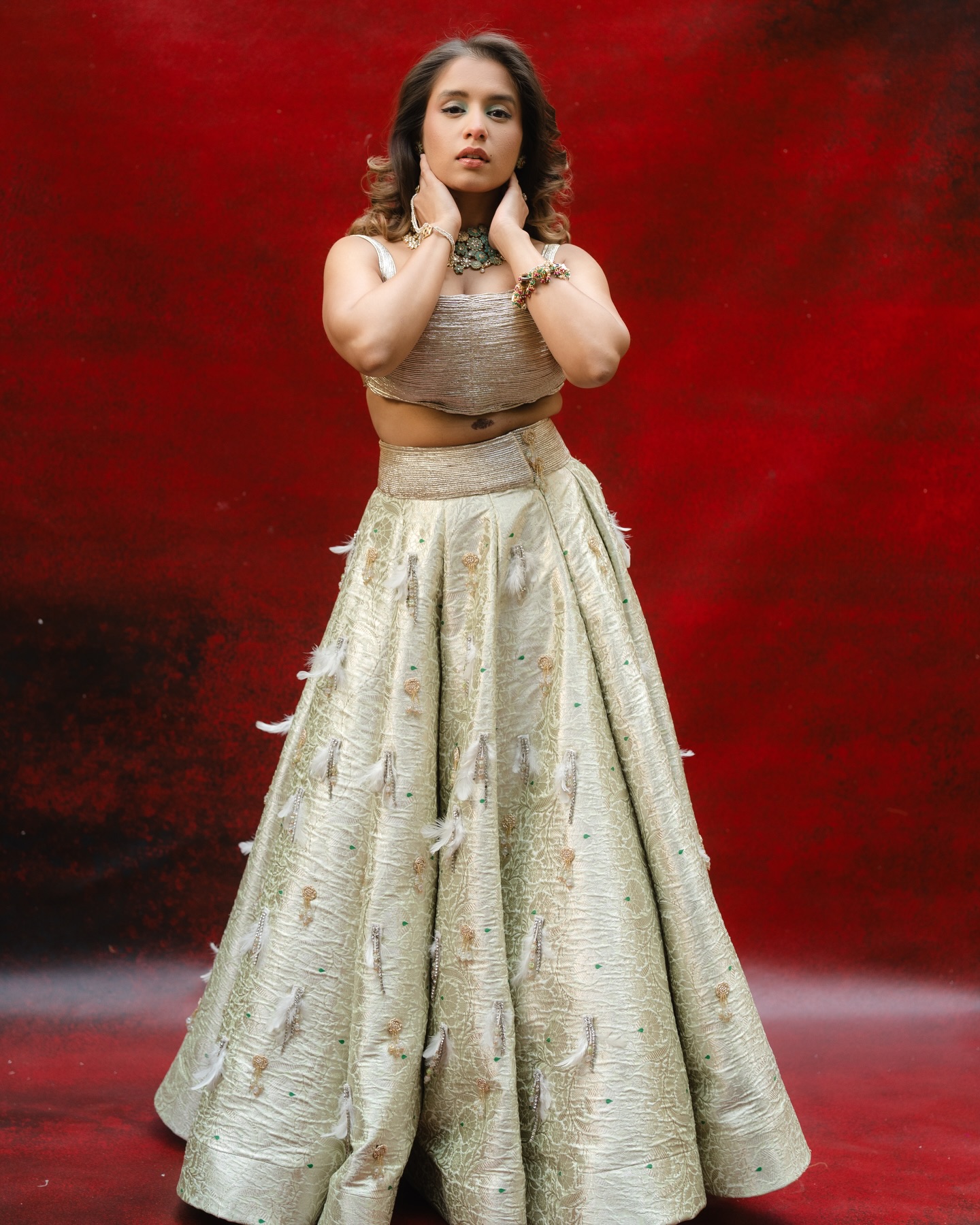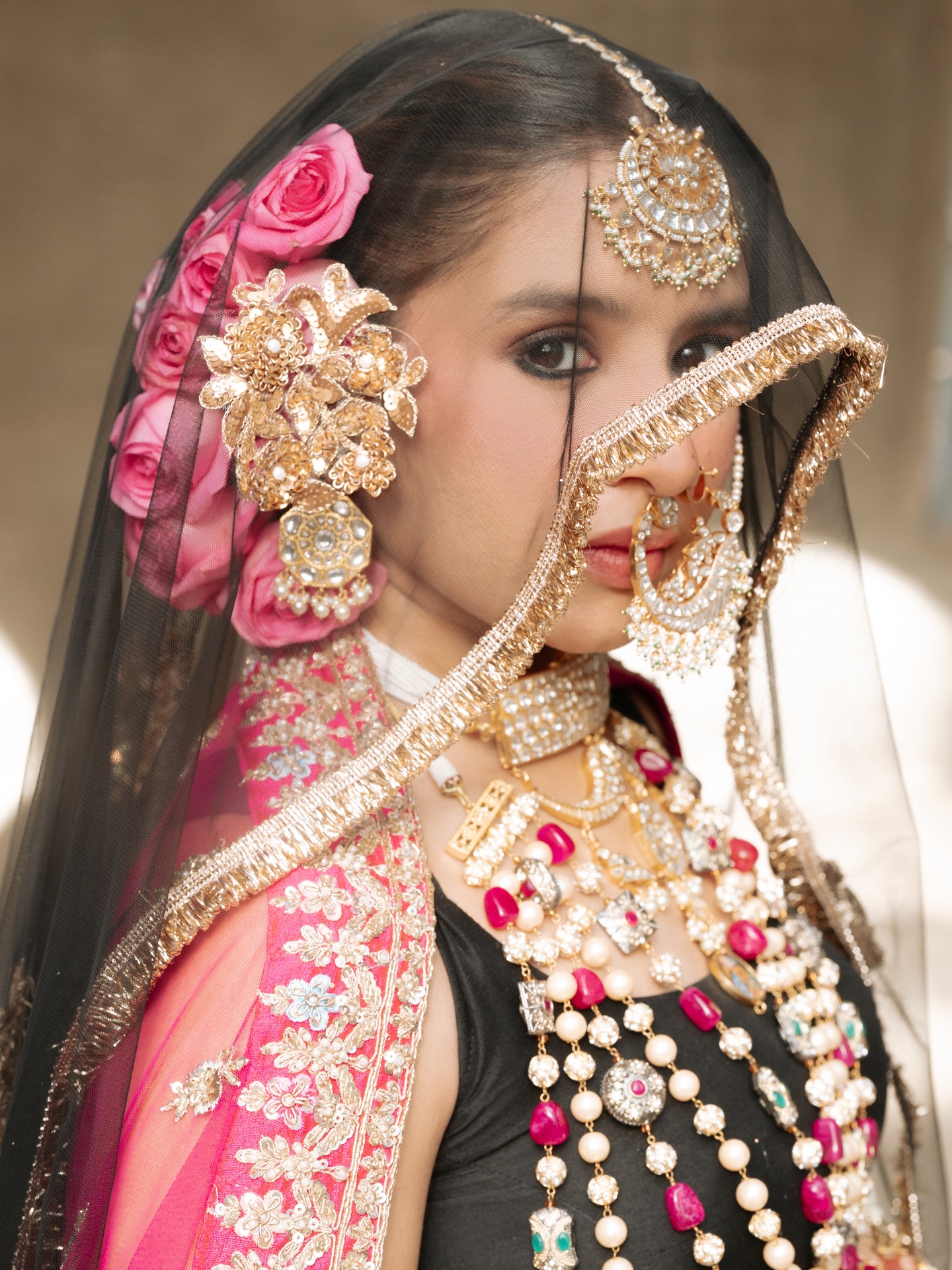
About Aishwarya
A voice rooted in centuries of Gujarati tradition, shaped by rigorous classical training, and propelled onto the national stage by raw, undeniable talent.
A voice rooted in centuries of Gujarati tradition, shaped by rigorous classical training, and propelled onto the national stage by raw, undeniable talent.
Born and raised in the culturally vibrant state of Gujarat, Aishwarya Majmudar was immersed in music from her earliest years. Growing up in a family where melody was a daily companion, she first encountered the transformative power of song through the devotional bhajans and folk garba her family sang during festivals and everyday gatherings.
Her formal training in Indian classical music began at a remarkably young age, under the guidance of distinguished gurus who recognized an extraordinary gift in the child. Steeped in the disciplined traditions of raga and tala, Aishwarya spent years mastering the intricacies of Hindustani classical music — from the meditative precision of khayal to the rhythmic exuberance of thumri and the devotional depth of bhajan.
What set her apart from her peers was not merely technical proficiency, but an emotional maturity that belied her years. Teachers often remarked on her ability to inhabit a raga fully, to let the music speak through her rather than imposing herself upon it. This intuitive understanding of melody and emotion would become the hallmark of her artistic identity.
Gujarat's rich musical heritage — from the soulful verses of Narsinh Mehta to the spirited rhythms of garba — became the fertile soil in which her artistry took root and flourished.
In 2008, at just fifteen years of age, Aishwarya Majmudar stepped onto the national stage as a contestant on STAR Voice of India — Chhote Ustad, one of India's most prestigious televised singing competitions for young talent. What followed was a series of performances so commanding, so emotionally charged, that they transformed a gifted teenager from Gujarat into a household name across the country.
Her renditions during the competition were distinguished by an unusual combination of classical precision and emotional authenticity. While other contestants relied on vocal acrobatics, Aishwarya chose to tell stories through song — each performance a miniature journey through the landscape of human feeling. The judges and audiences alike were moved not just by her technical skill, but by the depth of feeling she brought to every note.
Winning the Chhote Ustad title was more than a competition victory; it was the announcement of a major new voice in Indian music. The acclaim opened doors to Bollywood playback opportunities, concert invitations from across the globe, and collaborations with some of India's most respected music directors. Yet through all of this, Aishwarya remained grounded in the classical and folk traditions that had shaped her voice.
The Chhote Ustad triumph became the pivot point around which her entire career would revolve — proof that authenticity and classical training could resonate with millions in an age of manufactured pop sensibility. It validated her belief that the deepest musical traditions carry a universal power that transcends genre, language, and generation.
From a young prodigy in Gujarat to an internationally celebrated vocalist, each year has added a new chapter to an extraordinary story.
Aishwarya's vocal range is both expansive and deeply nuanced, spanning over three octaves with a tonal quality that critics have described as "liquid gold." Her voice possesses a rare warmth in the lower registers, a crystalline clarity in the mid-range, and a soaring, effortless brilliance at the top of her range.
Rooted in the meend and gamak techniques of Hindustani classical music, her ornamentation is never gratuitous — each embellishment serves the emotional narrative of the song. Her control over dynamics allows her to move from a whisper-soft pianissimo to a full-throated fortissimo within a single phrase, creating moments of breathtaking dramatic impact.
What makes Aishwarya truly exceptional is her ability to move seamlessly across genres without ever losing her artistic identity. In folk music, she channels the raw, earthy energy of Gujarat's garba and raas traditions. In Indian classical, she demonstrates the patient discipline and improvisational mastery of years of raga-based training. Her Bollywood playback work reveals a chameleon-like ability to inhabit different characters and moods. And in devotional music, she achieves a transcendent sincerity that has made her bhajans beloved across communities.
This versatility is not mere eclecticism — it reflects a holistic understanding of Indian music as a continuum, where classical, folk, devotional, and popular traditions are branches of a single, ancient tree.
More than a performer, Aishwarya Majmudar has become a living embodiment of Gujarat's rich, centuries-old musical heritage on the global stage.
In an era when regional musical traditions face the homogenizing pressures of globalization, Aishwarya Majmudar stands as a powerful counterforce. Through her performances, recordings, and public advocacy, she has brought the distinctive sounds of Gujarati music — the infectious rhythms of garba, the devotional intensity of bhajan, the melodic sophistication of classical raga — to audiences who might never have encountered them otherwise.
Her influence extends well beyond the concert stage. As a role model for aspiring young musicians across Gujarat and India, she demonstrates that commercial success and artistic integrity are not mutually exclusive. Her commitment to singing in Gujarati — alongside Hindi and other languages — has helped elevate the status of regional language music in the mainstream consciousness.
For the global Gujarati diaspora, Aishwarya's music serves as a vital cultural thread connecting communities spread across continents back to their roots. Her garba performances during Navratri have become landmark events in cities from London to New Jersey, drawing thousands who seek not just entertainment but a genuine reconnection with their heritage.
Music is not something I do — it is something I am. Every raga I learned as a child, every garba rhythm that pulsed through the streets of my hometown, every bhajan my grandmother hummed at dawn — they live inside me. When I sing, I am not performing; I am sharing the voice of a culture that has sung for thousands of years.
Aishwarya Majmudar
On Music, Heritage & Identity